 TURKANA FARMS, LLCGreen E-Market Bulletin June 5, 2025 TURKANA FARMS, LLCGreen E-Market Bulletin June 5, 2025 The first turkey to get up high, at one week old – photo by Mark ScherzerBack to SchoolHi all, Mark here.I went back to college for a seminar last week. The teacher provoking and guiding us was a now-93-year-old retired professor who had a profound effect on how I perceived the world for the last fifty plus years. The seminar followed a series of Saturday zoom meetings over the preceding academic year with up to 25 former students attending, all similarly feeling indebted to him. It reminded me why I came to so value a liberal education.The professor, Wyatt MacGaffey of Haverford College, is an anthropologist, and the subject of this last seminar was the possibility of a “reciprocal anthropology”, that is, a study of our own society using the same tools anthropologists have used for over a century to study others. To me, such a project is not only possible but essential. I was initially drawn to anthropology out of a desire to understand my own culture, particularly the interaction between people’s purported beliefs and their actions. My own history puzzled me. How come my parents taught me that there was no god, but nevertheless required that I receive a full religious education, including becoming a bar mitzvah in an orthodox shul?In his courses, Wyatt taught us to listen carefully to the narratives by which different individuals in a social group describe its life, note their position in the organization of the community, and then observe what they are actually doing — how it follows or deviates from their theory of themselves. It was through a synthesis of these observations that you could most sensitively understand the community you were studying. I ever thereafter found such an approach useful in trying to figure out the realities I face, especially where I’m hearing irreconcilably different narratives, as we so often seem to lately.Consider this week’s newspaper. “The White House Gutted Science Funding. Now It Wants to ‘Correct’ Research”. A Presidential executive order mandating “gold plated science” has been criticized by a group called Stand Up For Science, which says the government is trying to dictate scientific outcomes for political ends (“fool’s gold.”). Last week, a similar fight played out between vaccine advocates and skeptics, as the head of the Department of Health and Human Services sought to cut access to COVID vaccines for pregnant women and young children, while scientists at the Centers for Disease Control still endorsed them. Both sides in these battles ostensibly appeal to the same ideals of pure, disinterested science, yet come to diametrically opposed positions.How do we, the public, navigate such clashes? As Wyatt recently told us, while there may be facts which are indisputable and can’t be undone by “alternative facts,” there are precious few, if any, truths about more complex realities that can be established with absolute certainty. As one anthropological study of a science lab demonstrated, even the work of the purest white coat science laboratory may be shaped by such non-scientific influences as the lab’s internal culture. Yet we can’t just throw up our hands and stop trying to understand reality because of such difficulty. It is not just an abstract academic exercise. We all need to take in information, make judgments and act in the real world, which includes this farm. The first turkey to get up high, at one week old – photo by Mark ScherzerBack to SchoolHi all, Mark here.I went back to college for a seminar last week. The teacher provoking and guiding us was a now-93-year-old retired professor who had a profound effect on how I perceived the world for the last fifty plus years. The seminar followed a series of Saturday zoom meetings over the preceding academic year with up to 25 former students attending, all similarly feeling indebted to him. It reminded me why I came to so value a liberal education.The professor, Wyatt MacGaffey of Haverford College, is an anthropologist, and the subject of this last seminar was the possibility of a “reciprocal anthropology”, that is, a study of our own society using the same tools anthropologists have used for over a century to study others. To me, such a project is not only possible but essential. I was initially drawn to anthropology out of a desire to understand my own culture, particularly the interaction between people’s purported beliefs and their actions. My own history puzzled me. How come my parents taught me that there was no god, but nevertheless required that I receive a full religious education, including becoming a bar mitzvah in an orthodox shul?In his courses, Wyatt taught us to listen carefully to the narratives by which different individuals in a social group describe its life, note their position in the organization of the community, and then observe what they are actually doing — how it follows or deviates from their theory of themselves. It was through a synthesis of these observations that you could most sensitively understand the community you were studying. I ever thereafter found such an approach useful in trying to figure out the realities I face, especially where I’m hearing irreconcilably different narratives, as we so often seem to lately.Consider this week’s newspaper. “The White House Gutted Science Funding. Now It Wants to ‘Correct’ Research”. A Presidential executive order mandating “gold plated science” has been criticized by a group called Stand Up For Science, which says the government is trying to dictate scientific outcomes for political ends (“fool’s gold.”). Last week, a similar fight played out between vaccine advocates and skeptics, as the head of the Department of Health and Human Services sought to cut access to COVID vaccines for pregnant women and young children, while scientists at the Centers for Disease Control still endorsed them. Both sides in these battles ostensibly appeal to the same ideals of pure, disinterested science, yet come to diametrically opposed positions.How do we, the public, navigate such clashes? As Wyatt recently told us, while there may be facts which are indisputable and can’t be undone by “alternative facts,” there are precious few, if any, truths about more complex realities that can be established with absolute certainty. As one anthropological study of a science lab demonstrated, even the work of the purest white coat science laboratory may be shaped by such non-scientific influences as the lab’s internal culture. Yet we can’t just throw up our hands and stop trying to understand reality because of such difficulty. It is not just an abstract academic exercise. We all need to take in information, make judgments and act in the real world, which includes this farm. Turkeys arrive in a box Photo by Mark ScherzerLike how do you raise your baby turkeys? Several years back I effused over a Dutch invention called a mother plate, for brooding newly hatched chicks and poults. A board on adjustable low stilts uses a heat source with the strength of a regular light bulb to create a cozy space for the newly hatched birds to huddle underneath, simulating the brooding of a hen keeping her young warm under her feathers. It uses far less power and is safer than the 250 watt heat lamps customarily used. (Both our barn fires had started with brooding heat lamps.) The plate appealed to the luddite in me. In that respect, I’m a bit like the MAHA (Make America Healthy Again) anti-vaccination folks who believe in lower tech remedies and letting nature take its course. I was an immediate fan.The only problem was, once I started using it, that I wasn’t sure the plate was working well. Turkeys are always fragile at first, with far higher mortality than chickens. When they arrived in cool weather, between shipping stress and cold I could anticipate losing 10% of the birds. I couldn’t be entirely sure the reason, but eventually I added back a heat lamp as an alternative to the mother plate. Then, last year, when I ordered the turkeys the hatchery made me sign a pledge to use only heat lamps, with no mother plate, for at least the first two to three weeks. I don’t think that pledge is legally enforceable, but it made me think carefully about whether to follow through. Turkeys arrive in a box Photo by Mark ScherzerLike how do you raise your baby turkeys? Several years back I effused over a Dutch invention called a mother plate, for brooding newly hatched chicks and poults. A board on adjustable low stilts uses a heat source with the strength of a regular light bulb to create a cozy space for the newly hatched birds to huddle underneath, simulating the brooding of a hen keeping her young warm under her feathers. It uses far less power and is safer than the 250 watt heat lamps customarily used. (Both our barn fires had started with brooding heat lamps.) The plate appealed to the luddite in me. In that respect, I’m a bit like the MAHA (Make America Healthy Again) anti-vaccination folks who believe in lower tech remedies and letting nature take its course. I was an immediate fan.The only problem was, once I started using it, that I wasn’t sure the plate was working well. Turkeys are always fragile at first, with far higher mortality than chickens. When they arrived in cool weather, between shipping stress and cold I could anticipate losing 10% of the birds. I couldn’t be entirely sure the reason, but eventually I added back a heat lamp as an alternative to the mother plate. Then, last year, when I ordered the turkeys the hatchery made me sign a pledge to use only heat lamps, with no mother plate, for at least the first two to three weeks. I don’t think that pledge is legally enforceable, but it made me think carefully about whether to follow through. New arrivals under lights Photo by Mark ScherzerI considered the hatchery’s position in the trading system. It was not at financial risk if birds died more than 24 hours after arrival, nor did it sell heat lamps. Yes, it could indirectly benefit if bird purchasers were happy with their turkey raising experience. But it could also be acting from concern for bird welfare — making it to my mind more like the scientists who study how to protect us from climate change. I wasn’t sure, on the other hand, whether anyone advocating for exclusively using mother plates had a commercial interest in the decision. That disparity, combined with my empirical experience, led me to favor the hatchery’s analysis of reality.Returning to the farm, my mind was in a ferment reminiscent of my college days. Wyatt had challenged us with new thoughts just as he had when we were undergrads. But finding my turkeys continuing to thrive with far less mortality than in some recent years — only one inexplicable death — I was at peace with Wyatt’s methodical approach to getting at the truth of things, which has remained with me ever since. New arrivals under lights Photo by Mark ScherzerI considered the hatchery’s position in the trading system. It was not at financial risk if birds died more than 24 hours after arrival, nor did it sell heat lamps. Yes, it could indirectly benefit if bird purchasers were happy with their turkey raising experience. But it could also be acting from concern for bird welfare — making it to my mind more like the scientists who study how to protect us from climate change. I wasn’t sure, on the other hand, whether anyone advocating for exclusively using mother plates had a commercial interest in the decision. That disparity, combined with my empirical experience, led me to favor the hatchery’s analysis of reality.Returning to the farm, my mind was in a ferment reminiscent of my college days. Wyatt had challenged us with new thoughts just as he had when we were undergrads. But finding my turkeys continuing to thrive with far less mortality than in some recent years — only one inexplicable death — I was at peace with Wyatt’s methodical approach to getting at the truth of things, which has remained with me ever since. Three weeks old and happily doing their turkey roosting thing Photo by Mark ScherzerTURKEY SALE – New Poults ArrivingOur day old poults, to be raised for Thanksgiving, arrived on schedule from the hatchery three weeks ago. This year we will once again raise Blue Slates and Bourbon Reds, heritage breeds preserved for their exceptional flavor. This year they will have been joined by Naragansetts, which we haven’t been able to get for the last couple of years. Naragansetts have particularly interesting plumage, so this year’s flock should present a spectacular show. Reservation forms for this year’s birds (again at $12/lb) will go out in a month or so.In order to move last year’s remaining birds out of the freezer, we’re reducing the price to $8 a lb. There are several in the 7 to 9 lb. range and some in the 14 to 15 lb range, with one big 18 lb tom as well in the freezer. We made one a couple of weeks ago and the flavor was still superlative.WHAT’S AVAILABLE THIS WEEKEGGS ARE STILL WITH US! DESPITE THE CARNAGE, THE REMAINING HENS ARE STILL DOING THEIR THING, PRODUCING ENOUGH FOR OUR REGULARS. $6 a dozenSpring goodies:Rhubarb: $5/lb Three weeks old and happily doing their turkey roosting thing Photo by Mark ScherzerTURKEY SALE – New Poults ArrivingOur day old poults, to be raised for Thanksgiving, arrived on schedule from the hatchery three weeks ago. This year we will once again raise Blue Slates and Bourbon Reds, heritage breeds preserved for their exceptional flavor. This year they will have been joined by Naragansetts, which we haven’t been able to get for the last couple of years. Naragansetts have particularly interesting plumage, so this year’s flock should present a spectacular show. Reservation forms for this year’s birds (again at $12/lb) will go out in a month or so.In order to move last year’s remaining birds out of the freezer, we’re reducing the price to $8 a lb. There are several in the 7 to 9 lb. range and some in the 14 to 15 lb range, with one big 18 lb tom as well in the freezer. We made one a couple of weeks ago and the flavor was still superlative.WHAT’S AVAILABLE THIS WEEKEGGS ARE STILL WITH US! DESPITE THE CARNAGE, THE REMAINING HENS ARE STILL DOING THEIR THING, PRODUCING ENOUGH FOR OUR REGULARS. $6 a dozenSpring goodies:Rhubarb: $5/lbSorrel: $3/bag Garlic chives $1/Bunch Spearmint: $1/bunch Lovage $1/bunch Horseradish $4/lb.Coming soon: mint, spinach, arugulaIn the red meat department, frozen lamb:Butterflied legs of lamb $16/lb Rib or Loin chops (packs of 2) $14/lb Small racks of lamb $14/lb Riblets (breast of lamb) $8/lb Shanks $12/lb Ground lamb $7/lb 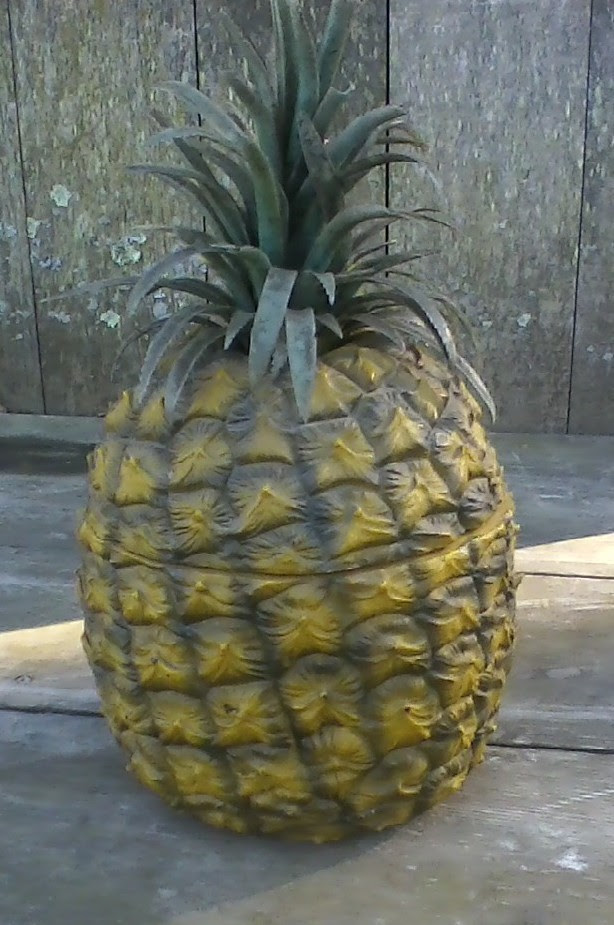 FARM PICKUPS:Email us your order at farm@turkanafarms.com, and let us know when you’d like to pick up your order. It will be put out for you on the side screened porch of the farmhouse (110 Lasher Ave., Germantown) in a bag. You can leave cash or a check in the now famous pineapple on the porch table. Because I’m now here full time, we’re abandoning regular pick-up times. Let us know when you want your order any day between 10 and 5, and unless there are unusual circumstances we’ll be able to ready it to your convenience. If you have questions, don’t hesitate to call or text at 917-544-6464 or email. FARM PICKUPS:Email us your order at farm@turkanafarms.com, and let us know when you’d like to pick up your order. It will be put out for you on the side screened porch of the farmhouse (110 Lasher Ave., Germantown) in a bag. You can leave cash or a check in the now famous pineapple on the porch table. Because I’m now here full time, we’re abandoning regular pick-up times. Let us know when you want your order any day between 10 and 5, and unless there are unusual circumstances we’ll be able to ready it to your convenience. If you have questions, don’t hesitate to call or text at 917-544-6464 or email. HEAR OUR SHOWIf you’d enjoy hearing these bulletins out loud instead of reading them, we broadcast them on Robin Hood Radio, the nation’s smallest NPR station. You can find it on FM 91.9, AM 1020, WBSL-FM 91.7 “The Voice of Berkshire School” or streaming on the web at www.robinhoodradio.com, where podcasts of past broadcasts are also available under the title AgriCulture in the “On Demand” section. FM 91.7 “The Voice of Berkshire School”can be heard from just south of Pittsfield to the CT border. You can hear the station on WHDD FM 91.9 from Ashley Falls, MA down through the Cornwalls and in NY from just south of Hillsdale down to Dover Plains. You can hear the station on AM1020 from Stockbridge, MA to Kent and from Poughkeepsie to Pawling to Kent, Goshen, Torrington, Norfolk, and Ashley. Recently added for those in the Route 22 corridor from Ancram down to Pawling is FM frequency 97.5 And of course you can listen in our own neighborhood of Southwestern Columbia and Northwestern Dutchess County, where it is being broadcast from Annandale on Hudson, 88.1 FM. HEAR OUR SHOWIf you’d enjoy hearing these bulletins out loud instead of reading them, we broadcast them on Robin Hood Radio, the nation’s smallest NPR station. You can find it on FM 91.9, AM 1020, WBSL-FM 91.7 “The Voice of Berkshire School” or streaming on the web at www.robinhoodradio.com, where podcasts of past broadcasts are also available under the title AgriCulture in the “On Demand” section. FM 91.7 “The Voice of Berkshire School”can be heard from just south of Pittsfield to the CT border. You can hear the station on WHDD FM 91.9 from Ashley Falls, MA down through the Cornwalls and in NY from just south of Hillsdale down to Dover Plains. You can hear the station on AM1020 from Stockbridge, MA to Kent and from Poughkeepsie to Pawling to Kent, Goshen, Torrington, Norfolk, and Ashley. Recently added for those in the Route 22 corridor from Ancram down to Pawling is FM frequency 97.5 And of course you can listen in our own neighborhood of Southwestern Columbia and Northwestern Dutchess County, where it is being broadcast from Annandale on Hudson, 88.1 FM. FOLLOW USThe bulletins may also now be found in written form on line as well, at the Germantown, NY, portal ofhttp://imby.com/germantown/userblogs/agriculture-turkana-farms/ ©2025 Turkana Farms, LLC | 110 Lasher Avenue, Germantown, NY 12526 FOLLOW USThe bulletins may also now be found in written form on line as well, at the Germantown, NY, portal ofhttp://imby.com/germantown/userblogs/agriculture-turkana-farms/ ©2025 Turkana Farms, LLC | 110 Lasher Avenue, Germantown, NY 12526 |
Categories:
Leave a Reply