| A Watched Pot Never BoilsHi all, Mark here.”Patience is a virtue.” I don’t know if that’s a view unique to the societies of western Europe, whose values so deeply permeate our own settler-colonial American culture, or if it’s a more universally accepted truth. But there are a million ways we can be reminded that being impatient is childish, and that expressing impatience is impolite, unwise, or even risky.Think about it. There is broad consensus that the most annoying question a kid can ask is “Are we there yet, daddy (or mommy)?” Some people imitate children asking that question simply as a way of preempting the kids themselves from asking. In addition to ridiculing youthful impatience, people teach kids from an early age that there is danger in anticipating too eagerly, when we tell them “Don’t count your chickens before they hatch.” Or by a gentler, more indirect aphorism, we counsel that “A watched pot never boils.”We know what these expressions mean without thinking too deeply about the mechanics of what they’re describing. One of the few scientific principles I ever learned in school was the Heisenberg Uncertainty Principle — that the act of observing a phenomenon can cause changes in what you are observing. This “watched pot” saying messes with that principle. It agrees that observation has an effect, but suggests that effect is to completely close down the process being observed.Lately, I’ve been wondering whether in fact there is truth in this folk saying. I can transpose it to describe any number of highly desired farm events that seem to simply refuse to happen.Example one: A watched pond never fills.When I come over to give Eric a little affection as he works at his desk, I look over the shoulder I’m kneading to the pond to the west of the house. It feels like I haven’t seen the pond like this since the summer it was first dug out 24 years ago. The contractor guaranteed us then that the fall rains would transform it from a flat dirt expanse to a body of water, but it seemed to take forever to fill.This year, our early fall drought dropped the water table so low that when I was trying to catch the blind tom turkey and guide him back to the rest of the flock, he actually walked across the mud flat the pond had become to get away from me. For the last two weeks, through what has seemed a constant dreary procession of drizzles, rainstorms, flurries and snow falls, I’ve expected the pond to fill right back up. Yet it is still at least 5 feet below its usual high water mark. Is my anxious watching preventing it from filling up?Example two: A watched ewe never lambs.As I previously reported, we were quite surprised in November when, right in the middle of sheep shearing, one of the older charcoal grey ewes laid down, curled her lips, and after about 10 minutes of grunts expelled a large, healthy ram lamb. It’s about the earliest we’ve ever started lambing. The antecedent hanky-panky apparently happened not when the summer cooled down, but rather in June before the summer heated up. It took us by surprise because the long wool that had grown since spring had obscured our view of the ewes’ hind quarters. As Aaron, the shearer, flipped them on their backs, their udders came into view, and since their shearing we’ve been able to easily observe as their udders filled with milk. We know that four or five more ewes will be mothers quite soon.I am extremely impatient for these births to occur. I’m eagerly anticipating a carefree Christmas holiday in Québec. Our farm sitters, Arthur and Bernard, did fine last year when just two early ewes surprised us with births during the holiday. But with this many apparently in quite advanced stages of pregnancy, I don’t want a lambalanche to happen while we’re gone.One ewe, Skunky, is waddling as wide as a house with an udder already bigger than a large grapefruit. Every evening I say to Eric, “I’m pretty sure by tomorrow morning we’re going to have twins.” Every morning I predict the twins for that afternoon. And every day, to my surprise, nothing happens. Is my anxious watching slowing her down?Example three: A watched hen never lays.You’ve already heard this lament. I expected my several dozen new hens, whose hatch date was July 8, to be laying eggs by now. I’ve been barely satisfying my own egg needs with a production of just an egg a day since most of my older layers were killed in a series of hawk attacks.I anticipated they’d be laying by now because I read a couple of months ago that I should feed them high protein “grower feed” until the age of 18 weeks, or until they start laying eggs, when I should switch them to higher calcium “layer feed”. Did they mean the earlier of 18 weeks or the first egg production, or the later of the two dates? The articles lacked lawyerly precision so I just figured the two dates must be relatively contemporaneous and I’ve been anxiously watching for eggs ever since.Last week I googled “my 23 week old hens are not laying” and I got several articles saying, in essence, “Relax, they usually start laying in the 24th week.” And herein was revealed the real truth of the “watched pot” aphorism. Last week was actually the 21st week. It just felt to me like the 23rd. The constant expectation of results is precisely what makes the wait seem eternal.I know that eventually things come to pass. The fall vegetables I planted in August did finally produce in October, and have continued to now. Christmas, Chanukah and New Years, I’m relatively sure, will arrive on schedule. And when early in the new year I start next season’s planting indoors, I’ll just have to remind myself that a watched seed never sprouts.PS: From the writing of this bulletin on December 11 to publication on December 12 the pond filled back to high water mark. Later today I eagerly anticipate eggs, and twins. |

 Frozen in anticipation — photo by Mark Scherzer
 Carrots, turnips and beets, still harvesting December 11, photo by Mark Scherzer
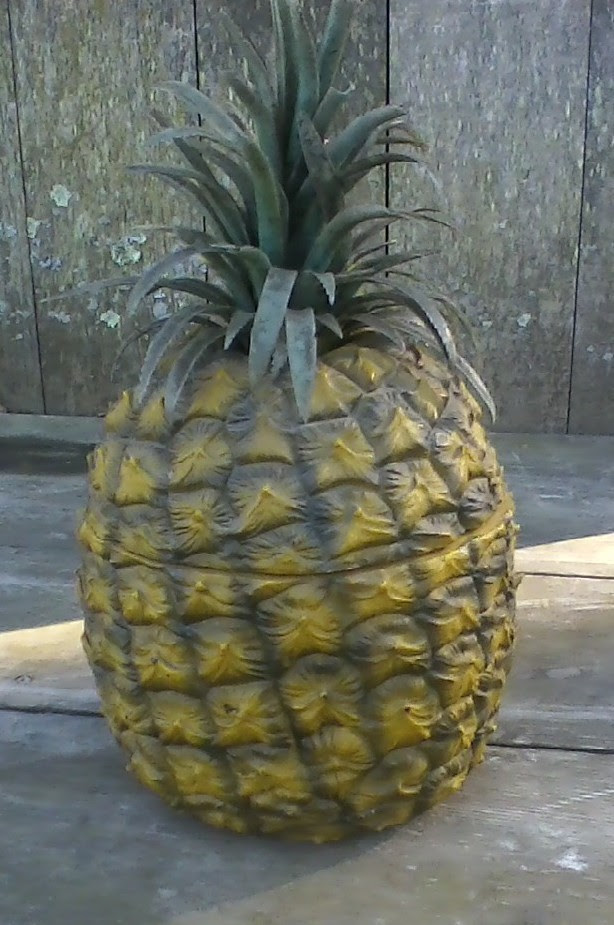 FARM PICKUPS:Email us your order at farm@turkanafarms.com, and let us know when you’d like to pick up your order. It will be put out for you on the side screened porch of the farmhouse (110 Lasher Ave., Germantown) in a bag. You can leave cash or a check in the now famous pineapple on the porch table. Because I’m now here full time, we’re abandoning regular pick-up times. Let us know when you want your order any day between 10 and 5, and unless there are unusual circumstances we’ll be able to ready it to your convenience. If you have questions, don’t hesitate to call or text at 917-544-6464 or email.
 HEAR OUR SHOWIf you’d enjoy hearing these bulletins out loud instead of reading them, we broadcast them on Robin Hood Radio, the nation’s smallest NPR station. You can find it on FM 91.9, AM 1020, WBSL-FM 91.7 “The Voice of Berkshire School” or streaming on the web at www.robinhoodradio.com, where podcasts of past broadcasts are also available under the title AgriCulture in the “On Demand” section. FM 91.7 “The Voice of Berkshire School”can be heard from just south of Pittsfield to the CT border. You can hear the station on WHDD FM 91.9 from Ashley Falls, MA down through the Cornwalls and in NY from just south of Hillsdale down to Dover Plains. You can hear the station on AM1020 from Stockbridge, MA to Kent and from Poughkeepsie to Pawling to Kent, Goshen, Torrington, Norfolk, and Ashley. Recently added for those in the Route 22 corridor from Ancram down to Pawling is FM frequency 97.5 And of course you can listen in our own neighborhood of Southwestern Columbia and Northwestern Dutchess County, where it is being broadcast from Annandale on Hudson, 88.1 FM.
 FOLLOW USThe bulletins may also now be found in written form on line as well, at the Germantown, NY, portal ofhttp://imby.com/germantown/userblogs/agriculture-turkana-farms/
Leave a Reply