Robin Hood Radio is listener supported local public radio. Thank you for listening. Please help keep us free and independent by becoming a supporter. Make your donation at this link http://robinhoodradio.com/donate.html
Be PreparedHi all, Mark here.As my last bulletin may have suggested to you, I was not a successful Boy Scout. As reflected in my scramble to get ready for the arrival of this year’s turkey poults only after I got the call from the Germantown Post Office telling me to come pick them up, I wouldn’t comfortably fit in an organization whose motto is “Be Prepared”.My excuse for the turkey scramble — that they arrived a day ahead of schedule — might once have been convincing. But “ahead of schedule” may no longer be a meaningful concept. The world is ahead of schedule. Certainly this spring has been. It was warm enough to plant tender seedlings outside by the first week of May. Rhubarb, which I advertised as still short and stumpy on April 22, 2023, was full sized and ready for sale by the same date this year. My peach and apricot trees bloomed similarly early.An early growing season, and a fast moving one. The fava beans are already in blossom. The peaches, barely visible little pips a couple of weeks ago, are suddenly somewhere between cherry and ping pong ball size, weighing down the branches despite my constant efforts to thin the fruit.How to respond when you realize you’re falling behind? There was a time when that would trigger a “ready or not, just do it” approach in me. Pass over the garden preparation and just plant. The results are nearly always disappointing. I’ve come to conclude that the thing to do when you realize you’re not ready is to, however belatedly, get ready.This weekend, it struck me that I was late with getting pumpkin seeds planted. They need well over 100 days to maturity, and the seeds should really be in the ground immediately after the last frost date. But despite my resolve to get them in, my approach has nevertheless been to spend 90% of my pumpkin efforts in preparation rather than rushing to plant.
Dockweed Photo by Mark ScherzerThis year’s pumpkin patch was last year’s tomato garden, where my challenge was removing the sea of mugwort that had taken hold while it lay fallow the several previous years. You can’t just plough up the ground to get rid of mugwort. The roots that travel so vigorously underground, allowing the weed to sprout up everywhere will, if chopped up, simply re-sprout in more areas I instead assiduously pulled each mugwort plant up by the roots, and tried following those roots to their tangled “mother roots,” dug them up and removed them from the garden. I succeeded in diminishing the mugwort dramatically, but no victory is total. In place of the mugwort I found a forest of an entirely different large invasive weed: broadleafed dock.
My pumpkin prep started, then, with digging out the dock, relatively fast work because the plants are each so big. I then cleared circles of about three feet in diameter of all remaining vegetation, dumped compost in each circle, used a cultivator to mix the compost into the soil, and created hills about six feet apart. About three hours of prep work for the portion of the patch I worked on. The final stage, the planting of five pumpkin seeds in each hill, took less than 20 minutes.Moving the tomatoes into the main garden has also been prep-heavy. The far eastern strip of garden had gotten so overrun with mugwort over the years that it appeared to most people not to be part of the garden at all, but a wild border. Starting at the south end, I have been following my mugwort removal technique for a couple of weeks now, doing it in three to six foot segments, then setting posts with cages and planting the tomatoes. I’ve followed advice I heard on a radio gardening show: dig deep holes, remove the lower leaves of the tomato plants, and plant with the exposed leaf nodes below ground level, where the plants will develop new and more vigorous roots. Again, roughly two hours of prep work for every 15 minutes of planting. As of this weekend, I have reached the halfway point in my tomato planting: 24 Rose de Beirne and 24 Pink Brandywine are in, and I’ve begun clearing for the two dozen each of Golden Jubilee and Black Krim to come.Thorough preparation is almost always worth it. Getting fully set up for the turkeys, with heat lamps on and food and water at the ready, before retrieving them from the post office, meant a smooth transition for the young poults. The weather helped too, but I’ve had just one death among the turkeys that survived their journey here, far lower attrition than is usual. The fencing work we did to prepare the garden last year and early this spring, too, means that I can plant with relative assurance that the plantings will make it to harvest. The only animal predation I’ve had was the night I forgot to close the garden gate. On the nights the gate was closed, everything has remained intact.While I was working on the pumpkin patch it occurred to me that my focus on preparation was not unique to the garden. Eric had arrived Friday morning for a “paint the library” vacation. He spent Friday, Saturday and part of Sunday clearing items, moving furniture, vacuuming walls, taping woodwork and protecting the bookshelves. Three days of preparation, for painting that would take considerably less time than the tedious preparation for it.At the end, the doing is really just the finishing touch to the preparing. In Eric’s case, I can already tell the room will suddenly come together, spectacularly. I can only hope for the same with the garden.
Library prep Photo by Eric Rouleau
WHAT’S AVAILABLE THIS WEEKIn the red meat department, frozen lamb:Butterflied legs of lamb $16/lb Rib or Loin chops (packs of 2) $14/lb Small racks of lamb $14/lb Riblets (breast of lamb) $8/lbLambs went to market April 9, so we will soon have a big supply of many other cuts.In the not so red meat department, frozen heritage breed turkeys, raised on organic grain, see below, $12/lbIn the yellow and white palette: Eggs: $6/dozen, plentifulVeggies: Rhubarb, $5/lb Sorrel $2/bag Horseradish: $4/lb Mint $1 a bunch Spearmint $1 a bunch
HOW ABOUT A TURKEY?HERITAGE BREED TURKEYS: This year we raised Holland Whites, Chocolates and Blue Slates. We still have about 6 birds ranging from 11 to 15 lbs. They were delicious for Thanksgiving. Fed on organic feed, pastured all day once they got big enough to go out, $12 lb
FARM PICKUPS:Email us your order at farm@turkanafarms.com, and let us know when you’d like to pick up your order. It will be put out for you on the side screened porch of the farmhouse (110 Lasher Ave., Germantown) in a bag. You can leave cash or a check in the now famous pineapple on the porch table. Because I’m now here full time, we’re abandoning regular pick-up times. Let us know when you want your order any day between 10 and 5, and unless there are unusual circumstances we’ll be able to ready it to your convenience. If you have questions, don’t hesitate to call or text at 917-544-6464 or email.
HEAR OUR SHOWIf you’d enjoy hearing these bulletins out loud instead of reading them, we broadcast them on Robin Hood Radio, the nation’s smallest NPR station. You can find it on FM 91.9, AM 1020, WBSL-FM 91.7 “The Voice of Berkshire School” or streaming on the web at www.robinhoodradio.com, where podcasts of past broadcasts are also available under the title AgriCulture in the “On Demand” section. FM 91.7 “The Voice of Berkshire School”can be heard from just south of Pittsfield to the CT border. You can hear the station on WHDD FM 91.9 from Ashley Falls, MA down through the Cornwalls and in NY from just south of Hillsdale down to Dover Plains. You can hear the station on AM1020 from Stockbridge, MA to Kent and from Poughkeepsie to Pawling to Kent, Goshen, Torrington, Norfolk, and Ashley. Recently added for those in the Route 22 corridor from Ancram down to Pawling is FM frequency 97.5 And of course you can listen in our own neighborhood of Southwestern Columbia and Northwestern Dutchess County, where it is being broadcast from Annandale on Hudson, 88.1 FM.
 Tomatoes replace mugwort, Photo by Mark Scherzer
 Dockweed Photo by Mark ScherzerThis year’s pumpkin patch was last year’s tomato garden, where my challenge was removing the sea of mugwort that had taken hold while it lay fallow the several previous years. You can’t just plough up the ground to get rid of mugwort. The roots that travel so vigorously underground, allowing the weed to sprout up everywhere will, if chopped up, simply re-sprout in more areas I instead assiduously pulled each mugwort plant up by the roots, and tried following those roots to their tangled “mother roots,” dug them up and removed them from the garden. I succeeded in diminishing the mugwort dramatically, but no victory is total. In place of the mugwort I found a forest of an entirely different large invasive weed: broadleafed dock.
 Library prep Photo by Eric Rouleau
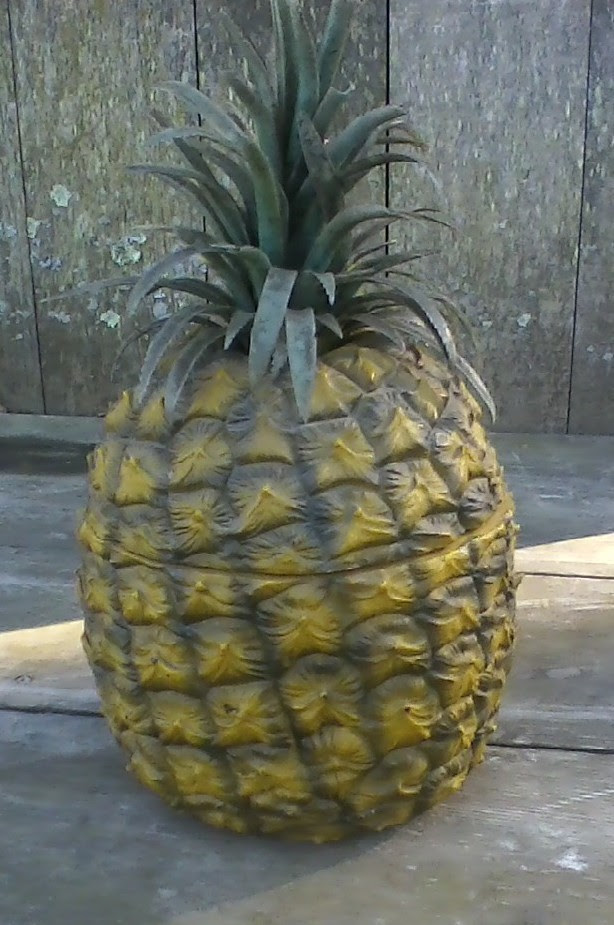 FARM PICKUPS:Email us your order at farm@turkanafarms.com, and let us know when you’d like to pick up your order. It will be put out for you on the side screened porch of the farmhouse (110 Lasher Ave., Germantown) in a bag. You can leave cash or a check in the now famous pineapple on the porch table. Because I’m now here full time, we’re abandoning regular pick-up times. Let us know when you want your order any day between 10 and 5, and unless there are unusual circumstances we’ll be able to ready it to your convenience. If you have questions, don’t hesitate to call or text at 917-544-6464 or email.
 HEAR OUR SHOWIf you’d enjoy hearing these bulletins out loud instead of reading them, we broadcast them on Robin Hood Radio, the nation’s smallest NPR station. You can find it on FM 91.9, AM 1020, WBSL-FM 91.7 “The Voice of Berkshire School” or streaming on the web at www.robinhoodradio.com, where podcasts of past broadcasts are also available under the title AgriCulture in the “On Demand” section. FM 91.7 “The Voice of Berkshire School”can be heard from just south of Pittsfield to the CT border. You can hear the station on WHDD FM 91.9 from Ashley Falls, MA down through the Cornwalls and in NY from just south of Hillsdale down to Dover Plains. You can hear the station on AM1020 from Stockbridge, MA to Kent and from Poughkeepsie to Pawling to Kent, Goshen, Torrington, Norfolk, and Ashley. Recently added for those in the Route 22 corridor from Ancram down to Pawling is FM frequency 97.5 And of course you can listen in our own neighborhood of Southwestern Columbia and Northwestern Dutchess County, where it is being broadcast from Annandale on Hudson, 88.1 FM.
 FOLLOW USThe bulletins may also now be found in written form on line as well, at the Germantown, NY, portal ofhttp://imby.com/germantown/userblogs/agriculture-turkana-farms/
Leave a Reply