| Gathering Darkness, Glimmers of LightHi All, Mark here.”Gathering darkness” is one of my favorite ways to describe the coming of dusk. In winter, this suggests being enveloped in a warm cocoon when daylight suddenly disappears.This last Sunday, however, dusk did not involve much gathering of darkness. Darkness, thanks to a bank of thick clouds advancing ahead of a major storm, defined the entire day. And though it was mid-December, it was so warm that no cocoon seemed necessary.Was it gloomy? Sure. A perfect match for the gloom induced by a world of war and disintegrating political stability. Was it also a worrisome reminder of dramatic climate change? You betcha!Oddly , the geopolitical situation — that big-picture human behavior — feels far more threatening and less manageable to me than the geophysical situation, the vast forces of nature. Why? Because the science of human behavior (the effects of religious ideology, group and personal identity, emotions like trust and distrust) is less understood than the science of physical processes. Also, human actions affect social and political institutions more immediately than they do climate. I don’t think the climate is “out to get me” personally, but I fear some humans may be.Finally, at a time when every human institution seems headed in the direction of Armageddon, I can still appreciate and take advantage of the positive aspects of climate change, which are numerous.This fall, I could continue to shower outdoors (my preference) until right around an unusually warm Halloween. In most earlier years, I had to drain the pipes and turn off the outdoor water no later than the beginning of October.This winter, I’ve been relishing how the mild temperatures so far have made animal care considerably easier. I have not yet plugged in either the submersible tank de-icer in the sheep’s water trough or the metal warming plate for the chickens’ water tank. The surface ice on the sheep’s trough, which sits outside the barn, has been thin and easily broken with a rock. The sheep and I both prefer operating this way. I, because it lowers the electric bill. They, because they prefer their drinking water cold.Even better, the pastures remain green. Moderate daytime temperatures mean fresh forage that lure the sheep out for late season grazing.They love their hay, but in the last couple of weeks they’ve taken their major meals outside; several times, I’ve found the hay I placed in the manger in the morning barely touched by evening. “Great,” I think, counting my pennies. “The longer I can stretch the hay supply the better!”Last Sunday’s and Monday’s storm eventually brought an astonishing six inches of rain, the sort of deluge that we’re told is becoming increasingly routine as a consequence of climate change. But I still found the bright side: “It sure beats 5 feet of snow. Nothing to complicate my upcoming departure to Quebec for Christmas with Eric and his family.” And no trudging through snowdrifts to get to the barn for my soon-to- arrive volunteer farm sitters, Steve, followed by Arthur and Bernard.Some of you will undoubtedly tell me that I’m taking far too benign a view. Pathological positivity, like someone starving alone on a desert island proclaiming the benefits of the quiet atmosphere, or a newly bankrupt stockbroker bragging of his break from crass materialism. I’m not entirely in denial, even about the short-term effects. Mild winters mean too many insect and animal pests surviving. Early spring leads to premature opening of fruit buds and vulnerability to normal frosts, with crop losses like nearby orchards had this year. You will also tell me, no doubt, that climate change in the Hudson Valley cannot be viewed in isolation. While agricultural productivity may increase here, the effects elsewhere, in far more vulnerable parts of the world, will be devastating. And in the grand picture, apocalyptic for all.I acknowledge all that. I agree we must still fight climate change rather than just live as if it will all be hunky dory. The sheer erratic variation of weather patterns we are facing now means that careful planning may prove futile. But does that mean no joy can be found in moments of successful adjustment?Even as we drive toward dystopia, I cling to the expectation that with assiduous effort, modeled on how farmers have always farmed, we can learn to adapt to change in the short term. I’ve seen Eric’s thinking as he gets drawn into the farming mindset. As I closed down the vegetable garden, he enumerated its successes and failures in his methodical way, calculating where production might usefully expand next season and where it might be cut back. It’s how we deal with changes in conditions. Humans adapt.OK, maybe I am forcing an unwarranted positivity. But give me a break. I’m looking for glimmers of light in the gathering darkness. And, in a season dedicated to celebrating what light may be gleaned in dark times, I wish for all of you to enjoy similar moments of hope. Take it where you can get it. |

 December Day Dusk Photo by Mark Scherzer
 WHAT ELSE IS AVAILABLE THIS WEEK –
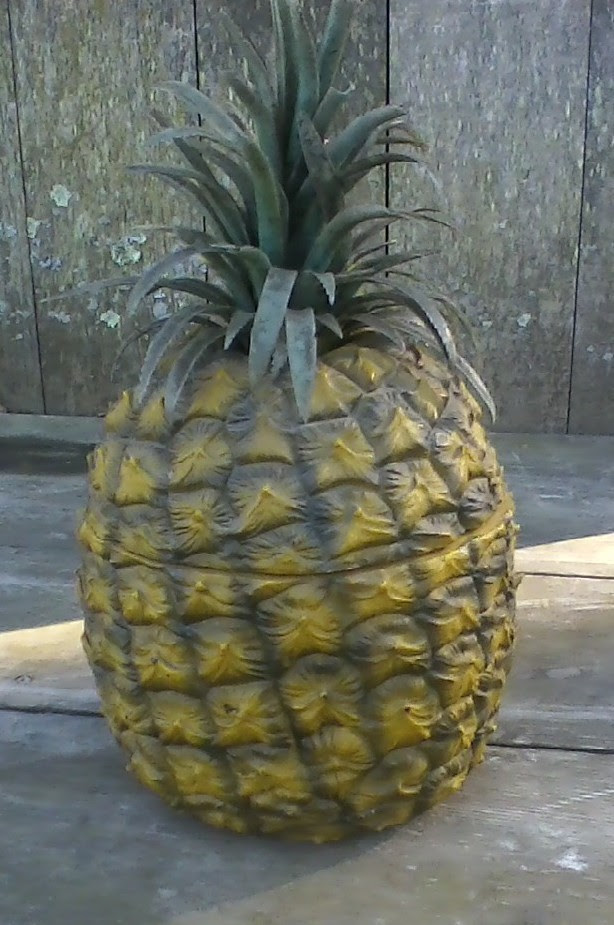 FARM PICKUPS:Email us your order at farm@turkanafarms.com, and let us know when you’d like to pick up your order. It will be put out for you on the side screened porch of the farmhouse (110 Lasher Ave., Germantown) in a bag. You can leave cash or a check in the now famous pineapple on the porch table. Because I’m now here full time, we’re abandoning regular pick-up times. Let us know when you want your order any day between 10 and 5, and unless there are unusual circumstances we’ll be able to ready it to your convenience. If you have questions, don’t hesitate to call or text at 917-544-6464 or email.
 HEAR OUR SHOWIf you’d enjoy hearing these bulletins out loud instead of reading them, we broadcast them on Robin Hood Radio, the nation’s smallest NPR station. You can find it on FM 91.9, AM 1020, WBSL-FM 91.7 “The Voice of Berkshire School” or streaming on the web at www.robinhoodradio.com, where podcasts of past broadcasts are also available under the title AgriCulture in the “On Demand” section. FM 91.7 “The Voice of Berkshire School”can be heard from just south of Pittsfield to the CT border. You can hear the station on WHDD FM 91.9 from Ashley Falls, MA down through the Cornwalls and in NY from just south of Hillsdale down to Dover Plains. You can hear the station on AM1020 from Stockbridge, MA to Kent and from Poughkeepsie to Pawling to Kent, Goshen, Torrington, Norfolk, and Ashley. Recently added for those in the Route 22 corridor from Ancram down to Pawling is FM frequency 97.5 And of course you can listen in our own neighborhood of Southwestern Columbia and Northwestern Dutchess County, where it is being broadcast from Annandale on Hudson, 88.1 FM.
 FOLLOW USThe bulletins may also now be found in written form on line as well, at the Germantown, NY, portal ofhttp://imby.com/germantown/userblogs/agriculture-turkana-farms/
Leave a Reply