| In the Path of PartialityHi all, Mark here.It’s nearly a full week since the solar eclipse that had North America in a tizzy, and I’m still, as much as I was on that day… surprised. I know here I’m supposed to say I was surprised by the majesty of the heavens, by the ability of small actor like the moon, with the right strategic moves, to overcome the power of a far more powerful force like the sun, or by the ability of humans of all persuasions to unite in awe at the natural world. But for me the surprise was more à la Peggy Lee: “Is that all there is?”I had not started with great expectations. My previous eclipse experiences had always been somewhat underwhelming. I had more or less resolved to just ignore it, since we were here, in Germantown, outside the “path of totality.” But then, over the pre-eclipse weekend, everyone was abuzz. I heard that the sun would be 96% covered here, that the local library was giving out eclipse watching glasses and hosting an eclipse watching event. Learning that the next total eclipse would not cross North America until 2044, a date past my actuarial shelf life, I began to think I shouldn’t miss out.Returning from a night in the City with Eric, I drove my friend, Steve back up here on the morning of the eclipse. We heard an animal behavior specialist on the radio, suggesting that people whose pets suffered from anxiety should keep them indoors, leading Steve to relate his childhood eclipse tale of holding his hands over his dog’s eyes the entire time to ensure that it did not stare at the sun. The interview also suggested that people observe and report their animals’ behavior during the eclipse, for the advancement of science.Ah, a purpose. I could observe my sheep reacting. Would they panic, frightened of a phenomena that runs so counter to their accustomed natural order? We might assume so, just as we in our ethnocentric way assume that less technologically advanced societies would be somehow be frightened into thinking the world was coming to an end, though it turns out many societies, close observers of nature, have had a good sense of eclipses as naturally occurring cyclical phenomena.Not having had the foresight to get eclipse glasses, I followed an on-line video to make a couple of pinhole viewing boxes. They worked well in the bright sunlight at 1 p.m. Looking through a hole I had cut in the right side the box I could see, projected through the pinhole on the left side projecting to the far wall of the box, the perfect disc of the sun. About a half hour before the predicted time, Steve and I toddled out to the pasture where the sheep were grazing.There we were, two familiar faces, but looking down into the boxes we were carrying, sauntering at a slow and erratic pace and not coming to say hello. We thought we were staying far enough away not to affect their movements. From their perspective, we were behaving bizarrely, hanging out in the field but not coming to say hello. They are acutely aware creatures, and wary of the unusual.The process of darkening was quite gradual, but it was hard to tell what was causing the change in light, as the skies began to cloud over at roughly the same time the eclipse began. It got so cloudy that my pinhole projector hardly showed anything. Steve and I slowly began to move back toward the barn; the sheep, too, moved their grazing locations in that direction, but always at a fair distance from us.Only Doodle came over to say hello. Usually a few others would as well, but, as I said, our unusual behavior seemed to be making them nervous. On top of everything else, as Steve moved, he shielded his own eyes from looking toward the sun by holding up his jacket, as if the sun’s rays had some sort of different quality during the eclipse. I don’t think they’d ever seen him walk that way. (I sure hadn’t.)Often, the herd seemed to be following Lale, the senior ewe. She was what Steve termed an “inadvertent leader.” She has always been a loner, often grazing at a fair distance from the rest of the flock. But sheep like to follow leaders, and her solo ventures can, in their eyes, look like leadership. Was this unusual? I doubt it. Were their movements affected by ours? I’m pretty sure they were. |
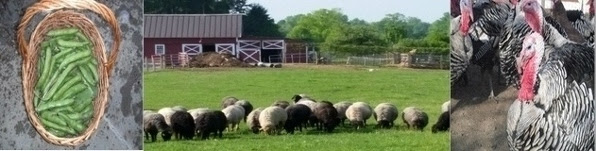
 Preparing to observe Photo by Steve Gutierrez
 At the moment of peak coverage, it was like deep dusk, but never so dark that the birds stopped chirping. Not as dark as the run up to some heavy thunderstorms I’ve been through. And what did the sheep do when it got dark? They went to their usual sleeping places and began settling in. No tremulous bleats over the imminent end of the world. Just evening falling earlier than expected. The chickens went inside too. I didn’t report this behavior anywhere. Is it significant that when it got dark, the animals prepared for sleep?
 Mark and Steve, unimpressed Photo by Mark Scherzer
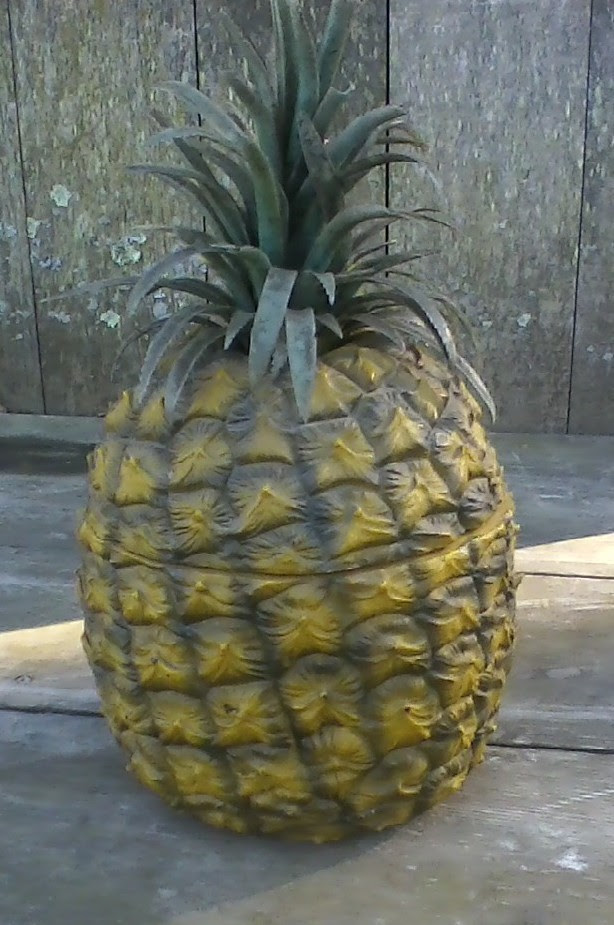 FARM PICKUPS:Email us your order at farm@turkanafarms.com, and let us know when you’d like to pick up your order. It will be put out for you on the side screened porch of the farmhouse (110 Lasher Ave., Germantown) in a bag. You can leave cash or a check in the now famous pineapple on the porch table. Because I’m now here full time, we’re abandoning regular pick-up times. Let us know when you want your order any day between 10 and 5, and unless there are unusual circumstances we’ll be able to ready it to your convenience. If you have questions, don’t hesitate to call or text at 917-544-6464 or email.
 HEAR OUR SHOWIf you’d enjoy hearing these bulletins out loud instead of reading them, we broadcast them on Robin Hood Radio, the nation’s smallest NPR station. You can find it on FM 91.9, AM 1020, WBSL-FM 91.7 “The Voice of Berkshire School” or streaming on the web at www.robinhoodradio.com, where podcasts of past broadcasts are also available under the title AgriCulture in the “On Demand” section. FM 91.7 “The Voice of Berkshire School”can be heard from just south of Pittsfield to the CT border. You can hear the station on WHDD FM 91.9 from Ashley Falls, MA down through the Cornwalls and in NY from just south of Hillsdale down to Dover Plains. You can hear the station on AM1020 from Stockbridge, MA to Kent and from Poughkeepsie to Pawling to Kent, Goshen, Torrington, Norfolk, and Ashley. Recently added for those in the Route 22 corridor from Ancram down to Pawling is FM frequency 97.5 And of course you can listen in our own neighborhood of Southwestern Columbia and Northwestern Dutchess County, where it is being broadcast from Annandale on Hudson, 88.1 FM.
 FOLLOW USThe bulletins may also now be found in written form on line as well, at the Germantown, NY, portal ofhttp://imby.com/germantown/userblogs/agriculture-turkana-farms/
Leave a Reply