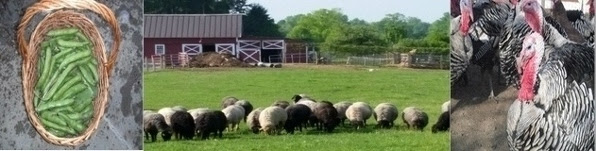
 TURKANA FARMS, LLCGreen E-Market Bulletin November 25, 2024 TURKANA FARMS, LLCGreen E-Market Bulletin November 25, 2024 These need explaining — photo by Eric RouleauJust the Facts, PleaseHi all, Mark here.Most of my life I’ve cultivated an air of detached irony. I offer satiric commentary about the day’s news. I point out the absurdities of human behavior in matters political and cultural. Borrowing an insight from my late partner’s son, Perry, I ask how the same people who claim it impossible for human activity to cause climate change also believe that clever politicians are able to shift the paths of hurricanes in order to damage particular communities for nefarious purposes? So anxious was I as a young man to understand how people embrace fact-defying beliefs, I almost became an anthropologist.To sit in judgment on the irrationalities of others is to imply a superior rationality of the one doing the judging. And it’s true, I do believe I am the all-too-rare fully rational man. With great confidence, I grace my friends with my insights. They’re lucky that I carefully weigh all the important factors, and invariably arrive at fair, sensible and balanced conclusions.Yet remarkably, my friends don’t always agree with me. One of them, George, has spent the last 55 years or so challenging my obviously irrefutable opinions with little niggling details he calls “facts” or “evidence,” leading to arguments that go on for hours. If I respond to these so-called “facts” or “evidence” by restating or clarifying my position, George has been known to accuse me of being a slippery character, espousing the sorts of contradictory positions I point out in others.What George calls slippery, I call nuanced. The world is full of complicated forces that need to be accounted for. Coming to the right conclusions can be exhausting.Farming is such a balm to my soul in part because it allows me to suspend my preoccupation with the squishy uncertainty of human behavior. I grapple instead with a physical world, where facts require a certainty verifiable by careful observation, science and research. Seeking explanations in this realm seems so much less fraught.Take, for instance, my recent encounter with some mysterious acorn squash. A few weeks ago, as I was dumping muck from the barn floor onto the compost heap, I noticed three quite perfect looking acorn squash on the ground. I had worked there the evening before and had not seen them. Their presence was mysterious. We hadn’t planted any in several years, nor bought any recently, and why would anyone put such beautiful, intact vegetables on the compost? I wondered, “Did someone deposit these here as a practical joke to drive me a little crazy? I can’t see an animal schlepping them here.”Two days later. another squash appeared there. This demanded exploration! I checked around the other side of the compost heap wall, and found a squash vine growing under the pokeweed, laden with fruit. I figured we had thrown out seeds from a store-bought squash last year, and I was delighted that a vine had resulted.Before putting the squash on sale, I decided to make one for dinner. I wasn’t sure it was the best night to do it, because as I cut it open to scoop out the seeds I realized I had a weird taste in my mouth. I thought I might be coming down with COVID. Even my afternoon cup of coffee tasted wrong. But I put butter, honey and salt in the squash cavity and baked it to accompany the scallops Eric planned to sauté.Sitting down to dinner, we each dug right in to our free garden bonus. But the taste was so bitter neither of us could get past the first bite. We chucked the squash.Shortly before dawn the next morning, both Eric and I were awakened, within a half hour of each other, with rather violent gastro-intestinal episodes (details spared) that recurred repeatedly through most of the day. While I at first suspected the seafood, it eventually occurred to me to google “bitter tasting acorn squash.” These need explaining — photo by Eric RouleauJust the Facts, PleaseHi all, Mark here.Most of my life I’ve cultivated an air of detached irony. I offer satiric commentary about the day’s news. I point out the absurdities of human behavior in matters political and cultural. Borrowing an insight from my late partner’s son, Perry, I ask how the same people who claim it impossible for human activity to cause climate change also believe that clever politicians are able to shift the paths of hurricanes in order to damage particular communities for nefarious purposes? So anxious was I as a young man to understand how people embrace fact-defying beliefs, I almost became an anthropologist.To sit in judgment on the irrationalities of others is to imply a superior rationality of the one doing the judging. And it’s true, I do believe I am the all-too-rare fully rational man. With great confidence, I grace my friends with my insights. They’re lucky that I carefully weigh all the important factors, and invariably arrive at fair, sensible and balanced conclusions.Yet remarkably, my friends don’t always agree with me. One of them, George, has spent the last 55 years or so challenging my obviously irrefutable opinions with little niggling details he calls “facts” or “evidence,” leading to arguments that go on for hours. If I respond to these so-called “facts” or “evidence” by restating or clarifying my position, George has been known to accuse me of being a slippery character, espousing the sorts of contradictory positions I point out in others.What George calls slippery, I call nuanced. The world is full of complicated forces that need to be accounted for. Coming to the right conclusions can be exhausting.Farming is such a balm to my soul in part because it allows me to suspend my preoccupation with the squishy uncertainty of human behavior. I grapple instead with a physical world, where facts require a certainty verifiable by careful observation, science and research. Seeking explanations in this realm seems so much less fraught.Take, for instance, my recent encounter with some mysterious acorn squash. A few weeks ago, as I was dumping muck from the barn floor onto the compost heap, I noticed three quite perfect looking acorn squash on the ground. I had worked there the evening before and had not seen them. Their presence was mysterious. We hadn’t planted any in several years, nor bought any recently, and why would anyone put such beautiful, intact vegetables on the compost? I wondered, “Did someone deposit these here as a practical joke to drive me a little crazy? I can’t see an animal schlepping them here.”Two days later. another squash appeared there. This demanded exploration! I checked around the other side of the compost heap wall, and found a squash vine growing under the pokeweed, laden with fruit. I figured we had thrown out seeds from a store-bought squash last year, and I was delighted that a vine had resulted.Before putting the squash on sale, I decided to make one for dinner. I wasn’t sure it was the best night to do it, because as I cut it open to scoop out the seeds I realized I had a weird taste in my mouth. I thought I might be coming down with COVID. Even my afternoon cup of coffee tasted wrong. But I put butter, honey and salt in the squash cavity and baked it to accompany the scallops Eric planned to sauté.Sitting down to dinner, we each dug right in to our free garden bonus. But the taste was so bitter neither of us could get past the first bite. We chucked the squash.Shortly before dawn the next morning, both Eric and I were awakened, within a half hour of each other, with rather violent gastro-intestinal episodes (details spared) that recurred repeatedly through most of the day. While I at first suspected the seafood, it eventually occurred to me to google “bitter tasting acorn squash.”Bingo. One article in gardeningknowhow.com (“My Squash is Bitter Tasting,“) explained that all members of the cucurbit family (cucumbers, melons and pumpkins in addition to squash) produce powerful toxins called cucurbitacin. They may produce them in a particularly concentrated way when the plants are stressed by drought or if they have been cross-pollinated by wild squash plants. Too much cucurbitacin and the squash is bitter and makes you sick. Another article reassured that the toxin is unlikely to kill you, although you may wish it had, as the symptoms could endure all week.Either drought or cross-pollination could explain the toxin load in these squash, but there was no doubt that cucurbitacin had caused the bitterness, the illness, and likely even my impaired taste buds from handling the seeds and pulp. High praise to the agricultural chemists and toxicologists who explain all these things. Every day I seem to want answers to scientific questions. Like why, with my new brood of hens starting their 21st week of life, they have yet to lay a single egg. Everything I read assures me that they should have started laying in the 18th week.In our current post-truth world, social science courses that try to explain human behavior are being deleted from school curricula (“Republicans Target Social Sciences to Curb Ideas They Don’t Like“, New York Times, November 21, 2024), while federal agencies that fund and supervise hard sciences are about to be entrusted to those who do not believe in the academic research system. “Truth” and “facts” will soon be what powerful interests want them to be, no longer based on neutral inquiry to serve the common good. I would not be surprised to be told that it would have been good for me to eat the whole squash, to cleanse my system, or that somehow Dr. Fauci or the FDA are responsible through some corrupt motive for my hens’ retarded egg laying.So here’s my second resolution for the next four years: doing what I can to promote a truth-based value system informed by the sorts of pure science and academic inquiry that have so improved our lives. .  The farm life cycle starts again, 11-22-24, photo by Mark ScherzerWE TURN FROM TURKEY-RAISING TO LAMBING, BUT CAN STILL SATISFY YOUR LAST MINUTE THANKSGIVING NEEDSOur turkeys (this year we raised Blue Slates and Bourbon Reds, heritage breeds preserved for their exceptional flavor) were processed last Wednesday, and by Friday, sheep shearing day, the farm moved to the next phase of the year with the birth of the first lamb of the season in the middle of shearing.But we find ourselves with several extra birds, principally in the 7 to 9 lb. range and some in the 14 to 15 lb range, with the middle range of 10 to 13 lbs sold out. We’ve put the extras in the freezer, but they could be thawed quickly if you have a sudden need for a bird for Thursday. There is a pickup in NYC Tuesday evening, if you get your order to us by Tuesday noon. Otherwise at the farm Tuesday morning and Wednesday all day.These birds are far slower growing than broad breasted turkeys, able to develop fat that insures richer flavor. These have been fed on organic grain from Stone House Farm, supplemented by what they find in nature from flying, roaming and grazing by day (not the sedentary lives of supermarket turkeys). If you care about how the bird who’s been sacrificed for your table has lived, you should check out Princeton bioethicist Peter Singer’s essay, “Let’s End this Turkey Pardoning Nonsense,” in the November 22 New York Times.$12/lb plus $5 off-premises pickup fee if picked up in NYName___________________________ The farm life cycle starts again, 11-22-24, photo by Mark ScherzerWE TURN FROM TURKEY-RAISING TO LAMBING, BUT CAN STILL SATISFY YOUR LAST MINUTE THANKSGIVING NEEDSOur turkeys (this year we raised Blue Slates and Bourbon Reds, heritage breeds preserved for their exceptional flavor) were processed last Wednesday, and by Friday, sheep shearing day, the farm moved to the next phase of the year with the birth of the first lamb of the season in the middle of shearing.But we find ourselves with several extra birds, principally in the 7 to 9 lb. range and some in the 14 to 15 lb range, with the middle range of 10 to 13 lbs sold out. We’ve put the extras in the freezer, but they could be thawed quickly if you have a sudden need for a bird for Thursday. There is a pickup in NYC Tuesday evening, if you get your order to us by Tuesday noon. Otherwise at the farm Tuesday morning and Wednesday all day.These birds are far slower growing than broad breasted turkeys, able to develop fat that insures richer flavor. These have been fed on organic grain from Stone House Farm, supplemented by what they find in nature from flying, roaming and grazing by day (not the sedentary lives of supermarket turkeys). If you care about how the bird who’s been sacrificed for your table has lived, you should check out Princeton bioethicist Peter Singer’s essay, “Let’s End this Turkey Pardoning Nonsense,” in the November 22 New York Times.$12/lb plus $5 off-premises pickup fee if picked up in NYName___________________________e-mail________________ phone______________ Please check here if you would like to receive email offerings in season:______________Number of turkeys desired: ___________ Approx. weight desired ________ (Note: the smallest turkeys will be about 7 lbs, and we will have a very large supply of 8 to 9 lb hens. The toms will be more in the 13-17 lb. range, with the largest dressing out at up to 18 lbs. And there are always a few in the sizes in between )Pick up place: ___at the farm; ___Lower Manhattan___a point along the Taconic Parkway, Please send a deposit of $40 per bird to hold your reservation to Turkana Farms, LLC, 110 Lasher Ave., Germantown, NY, 12526. The balance due will be paid at the time of the pick up. .WHAT’S AVAILABLE THIS WEEKIn the red meat department, frozen lamb:Butterflied legs of lamb $16/lb Rib or Loin chops (packs of 2) $14/lb Small racks of lamb $14/lb Riblets (breast of lamb) $8/lbOther cuts imminently arriving.Eggs – Ask but availability will be spotty after a major predator attack on our older hens, with only a couple still around to lay. The new girls are doing fine, and should start producing in a few weeks, so be patient please.Veggies:Horseradish: $4/lb Oasis Turnips, large, $2/lb, small salad size, $2/bunch of six Frisee lettuce, $2/head Baby beets $3.00 a bunch, mix of Detroit red, pinstriped Chiogga and golden beets 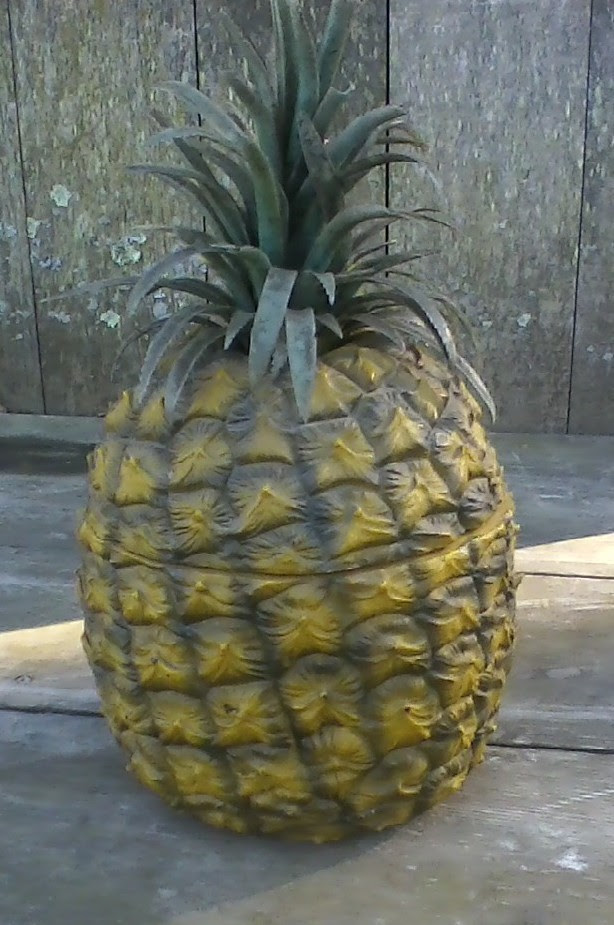 FARM PICKUPS:Email us your order at farm@turkanafarms.com, and let us know when you’d like to pick up your order. It will be put out for you on the side screened porch of the farmhouse (110 Lasher Ave., Germantown) in a bag. You can leave cash or a check in the now famous pineapple on the porch table. Because I’m now here full time, we’re abandoning regular pick-up times. Let us know when you want your order any day between 10 and 5, and unless there are unusual circumstances we’ll be able to ready it to your convenience. If you have questions, don’t hesitate to call or text at 917-544-6464 or email. FARM PICKUPS:Email us your order at farm@turkanafarms.com, and let us know when you’d like to pick up your order. It will be put out for you on the side screened porch of the farmhouse (110 Lasher Ave., Germantown) in a bag. You can leave cash or a check in the now famous pineapple on the porch table. Because I’m now here full time, we’re abandoning regular pick-up times. Let us know when you want your order any day between 10 and 5, and unless there are unusual circumstances we’ll be able to ready it to your convenience. If you have questions, don’t hesitate to call or text at 917-544-6464 or email. HEAR OUR SHOWIf you’d enjoy hearing these bulletins out loud instead of reading them, we broadcast them on Robin Hood Radio, the nation’s smallest NPR station. You can find it on FM 91.9, AM 1020, WBSL-FM 91.7 “The Voice of Berkshire School” or streaming on the web at www.robinhoodradio.com, where podcasts of past broadcasts are also available under the title AgriCulture in the “On Demand” section. FM 91.7 “The Voice of Berkshire School”can be heard from just south of Pittsfield to the CT border. You can hear the station on WHDD FM 91.9 from Ashley Falls, MA down through the Cornwalls and in NY from just south of Hillsdale down to Dover Plains. You can hear the station on AM1020 from Stockbridge, MA to Kent and from Poughkeepsie to Pawling to Kent, Goshen, Torrington, Norfolk, and Ashley. Recently added for those in the Route 22 corridor from Ancram down to Pawling is FM frequency 97.5 And of course you can listen in our own neighborhood of Southwestern Columbia and Northwestern Dutchess County, where it is being broadcast from Annandale on Hudson, 88.1 FM. HEAR OUR SHOWIf you’d enjoy hearing these bulletins out loud instead of reading them, we broadcast them on Robin Hood Radio, the nation’s smallest NPR station. You can find it on FM 91.9, AM 1020, WBSL-FM 91.7 “The Voice of Berkshire School” or streaming on the web at www.robinhoodradio.com, where podcasts of past broadcasts are also available under the title AgriCulture in the “On Demand” section. FM 91.7 “The Voice of Berkshire School”can be heard from just south of Pittsfield to the CT border. You can hear the station on WHDD FM 91.9 from Ashley Falls, MA down through the Cornwalls and in NY from just south of Hillsdale down to Dover Plains. You can hear the station on AM1020 from Stockbridge, MA to Kent and from Poughkeepsie to Pawling to Kent, Goshen, Torrington, Norfolk, and Ashley. Recently added for those in the Route 22 corridor from Ancram down to Pawling is FM frequency 97.5 And of course you can listen in our own neighborhood of Southwestern Columbia and Northwestern Dutchess County, where it is being broadcast from Annandale on Hudson, 88.1 FM. FOLLOW USThe bulletins may also now be found in written form on line as well, at the Germantown, NY, portal ofhttp://imby.com/germantown/userblogs/agriculture-turkana-farms/ ©2024 Turkana Farms, LLC | 110 Lasher Avenue, Germantown, NY 12526 FOLLOW USThe bulletins may also now be found in written form on line as well, at the Germantown, NY, portal ofhttp://imby.com/germantown/userblogs/agriculture-turkana-farms/ ©2024 Turkana Farms, LLC | 110 Lasher Avenue, Germantown, NY 12526 |
Categories:
Leave a Reply